Research Highlight/News
Research Highlight/News
Beamline 1.3W · Small and Wide Angle X-ray Scattering (SAXS/WAXS)
Research Highlight & News
Research & Publications
Research Highlights
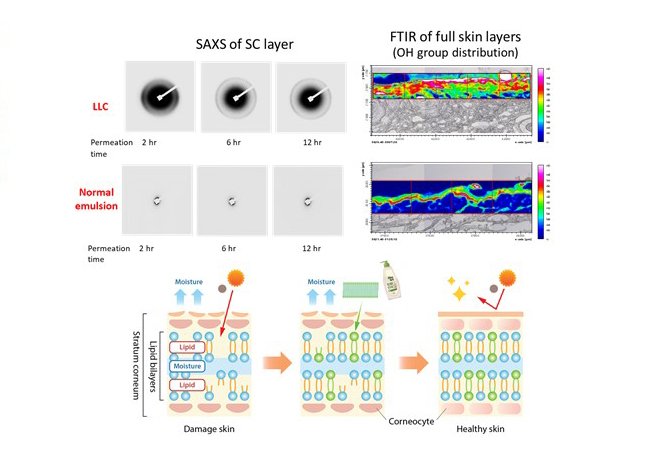
Synchrotron Proves the Efficacy of “MAMA KARA” Baby Lotion in Enhancing Skin Barrier
A healthy skin barrier (stratum corneum) requires a well-organized lipid bilayer. Lion (Thailand) Co., Ltd. partnered with SLRI to investigate “MAMA KARA”, an organic baby lotion featuring Liquid Crystal (LC) technology. Synchrotron SAXS/WAXS and FTIR analyses confirmed that the lotion’s active ingredients form a highly stable Lamellar Liquid Crystal (LLC) structure. In vitro permeation tests revealed its ability to penetrate and rearrange skin lipids, effectively mimicking a healthy skin barrier and retaining moisture. This successful industrial collaboration highlights the power of synchrotron technology in cosmetic product development.
Read More →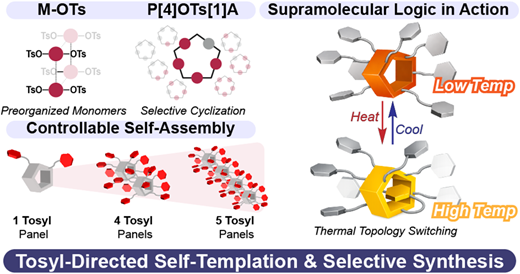
Tosyl-Directed Self-Templation for Selective Pillararene Formation and Topology Switching
Conventionally viewed as passive leaving groups, tosyl substituents have been discovered to act as active supramolecular directing elements. Utilizing synchrotron SAXS at BL1.3W and crystallographic techniques, researchers demonstrated that tosyl groups enable highly selective pillar[4+1]arene formation through self-templation via directional non-covalent interactions. The valency of tosyl groups controls the supramolecular hierarchy, dictating whether molecules assemble into discrete monomers, dimers, or infinite polymers. Additionally, a benzoquinone-bridged derivative exhibited temperature-driven topology switching coupled with a visible thermochromic charge-transfer response, opening new avenues for designing adaptive smart materials.
Read More →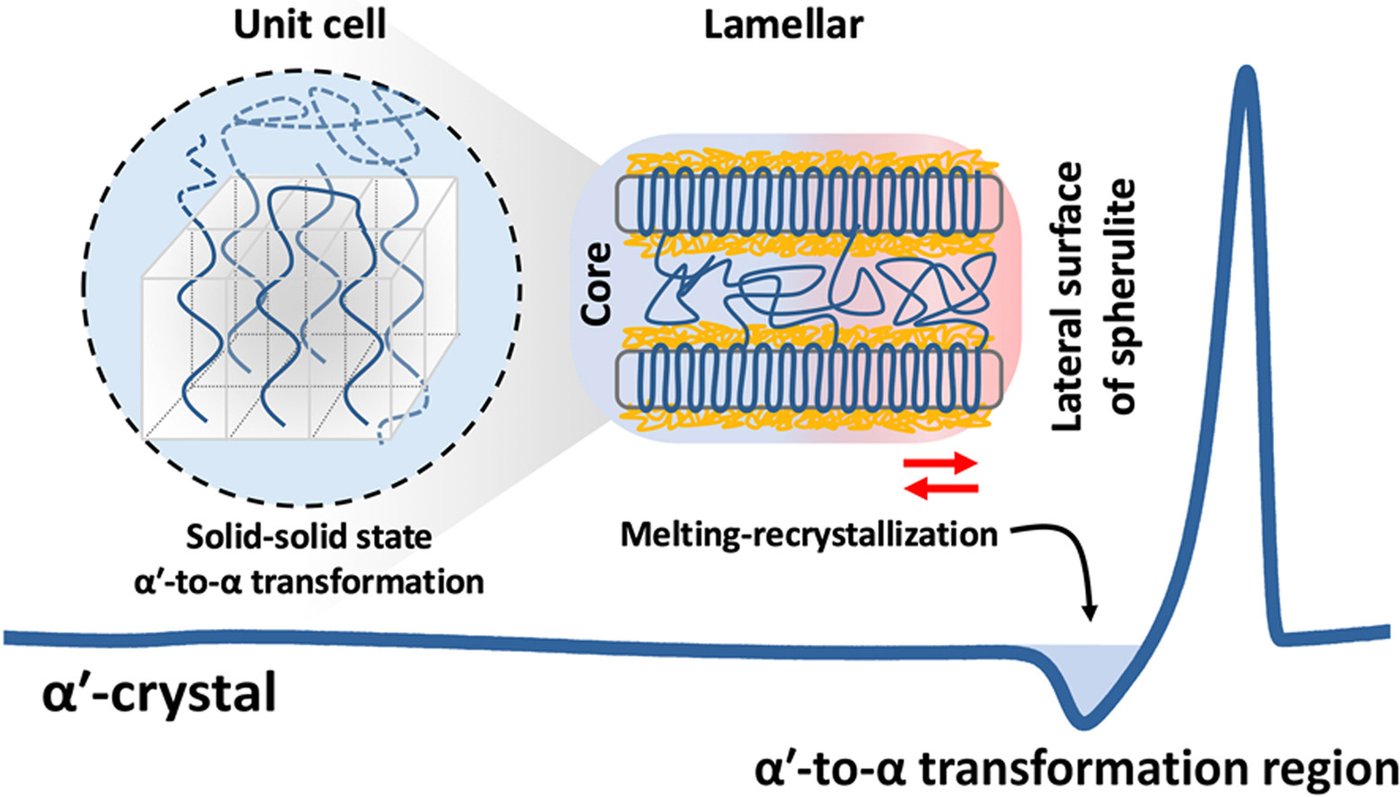
Unveiling the Hierarchical Structural Evolution and Crystal Transformation of PLLA
Poly(L-lactic acid) (PLLA) is a promising biodegradable polymer but exhibits complex thermal behaviors due to its α’- and α-polymorphs. Using simultaneous real-time synchrotron SAXS/WAXS at BL1.3W and SALS, this study resolved ongoing debates regarding PLLA’s α’-to-α crystal transformation. The findings confirmed that the transformation proceeds primarily through a direct solid-solid phase transition at the unit cell level, rather than an intermediate melt state. Concurrently, partial melting and recrystallization occur at the spherulite’s lateral surfaces, causing the multiple melting behaviors commonly observed during heating. These structural insights provide a crucial foundation for optimizing PLLA processing conditions.
Read More →News and Update

You can follow our news and updates, as well as various activities related to Beamline 1.3W, through several channels such as the Institute’s website, Facebook page, and YouTube channel, which are regularly updated with new information for users and interested parties.
WORKSHOP 2026
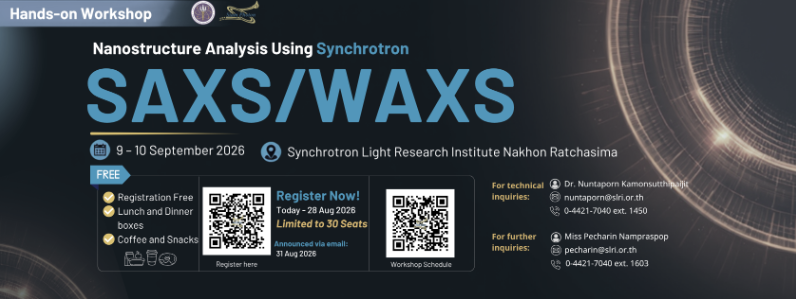
- Hands-on Synchrotron Techniques: Master sample preparation and perform SAXS/WAXS measurements at Beamline 1.3W using your own research samples.
- Practical Data Analysis: Learn to pre-process and analyze the data collected from your specific materials using SAXSIT software.
- Special lectures by invited speakers: Gain expert insights on advanced SAXS and WAXS applications to apply directly to your ongoing research.
WORKSHOP 2025
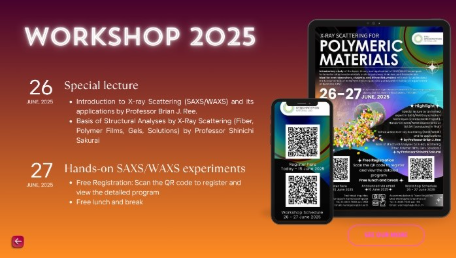
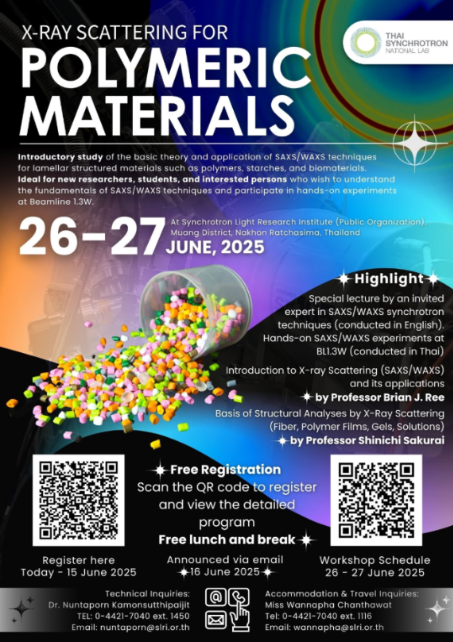
26 JUNE 2025 — Special lecture
- Introduction to X-ray Scattering (SAXS/WAXS) and its applications by Professor Brian J. Ree.
- Basis of Structural Analyses by X-Ray Scattering (Fiber, Polymer Films, Gels, Solutions) by Professor Shinichi Sakurai
27 JUNE 2025 — Hands-on SAXS/WAXS experiments
- Free Registration: Scan the QR code to register and view the detailed program
- Free lunch and break
Special Talk 2025
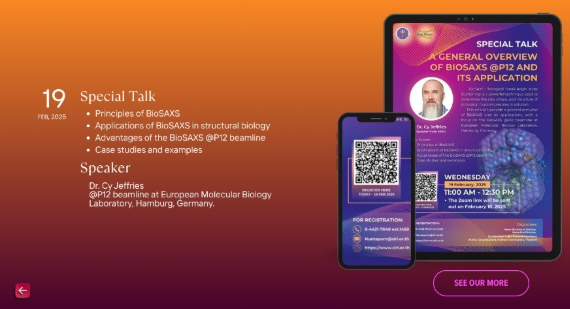
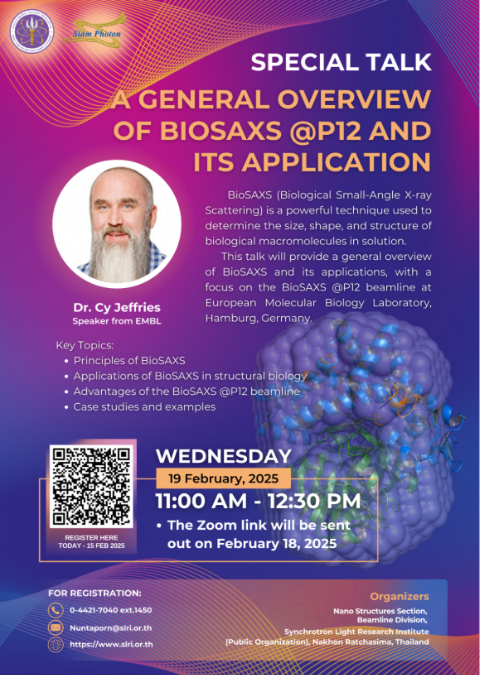
19 Feb 2025
- Principles of BioSAXS
- Applications of BioSAXS in structural biology
- Advantages of the BioSAXS @P12 beamline
- Case studies and examples
Speaker: Dr. Cy Jeffries — @P12 beamline at European Molecular Biology Laboratory, Hamburg, Germany.
WORKSHOP 2024
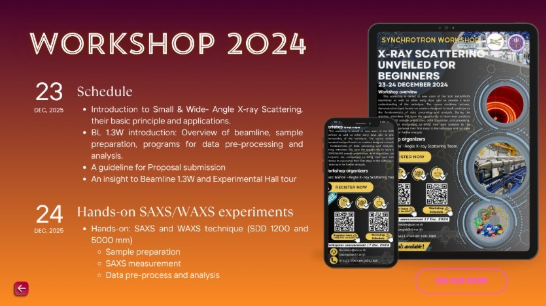
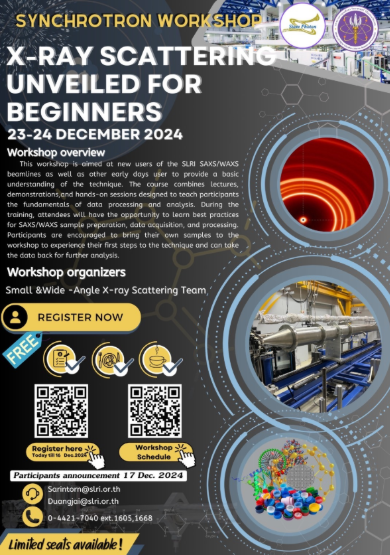
23 Dec 2025 — Schedule
- Introduction to Small & Wide- Angle X-ray Scattering, their basic principle and applications.
- BL 1.3W introduction: Overview of beamline, sample preparation, programs for data pre-processing and analysis.
- A guideline for Proposal submission
- An insight to Beamline 1.3W and Experimental Hall tour
24 Dec 2025 — Hands-on SAXS/WAXS experiments
- Hands-on: SAXS and WAXS technique (SDD 1200 and 5000 mm)
- Sample preparation
- SAXS measurement
- Data pre-process and analysis
WORKSHOP 2024
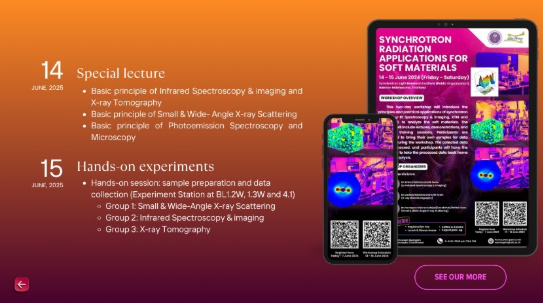
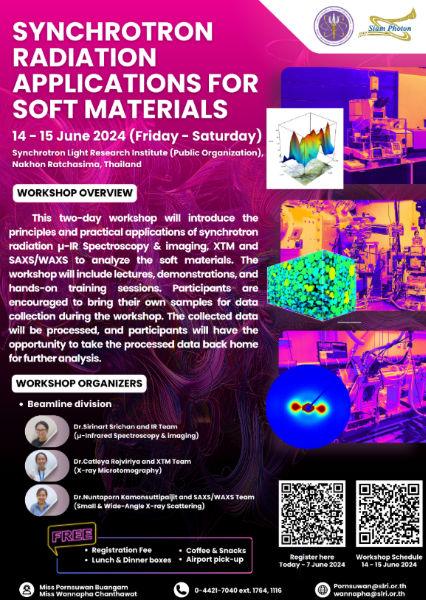
14 JUNE 2025 — Special lecture
- Basic principle of Infrared Spectroscopy & imaging and X-ray Tomography
- Basic principle of Small & Wide- Angle X-ray Scattering
- Basic principle of Photoemission Spectroscopy and Microscopy
15 JUNE 2025 — Hands-on experiments
- Hands-on session: sample preparation and data collection (Experiment Station at BL1.2W, 1.3W and 4.1)
- Group 1: Small & Wide-Angle X-ray Scattering
- Group 2: Infrared Spectroscopy & imaging
- Group 3: X-ray Tomography
WORKSHOP 2024
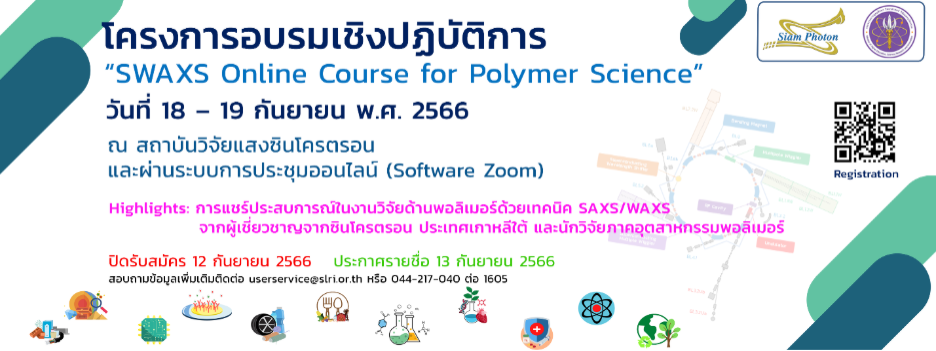
“SWAXS Online Course for Polymer Science” Workshop
September 18-19, 2023, at the Synchrotron Light Research Institute and via online conferencing (Zoom software)
Highlights: Sharing of research experience in polymer science using SAXS/WAXS techniques by experts from a synchrotron facility in South Korea and researchers from the polymer industry.