
Facility and Equipment Availability
Facility and Equipment Availability
Beamline 1.3W · Small and Wide Angle X-ray Scattering (SAXS/WAXS)
Facility and Equipment Availability
Support facilities, equipment & Beamline Manual
Support Facilities & Equipment
In-situ Tensile Stage (SCG stage)
A sample stretching system at BL1.3W is available with a maximum elongation of 40 cm, a maximum tensile force of 500 N, and heating capability up to 200 °C.
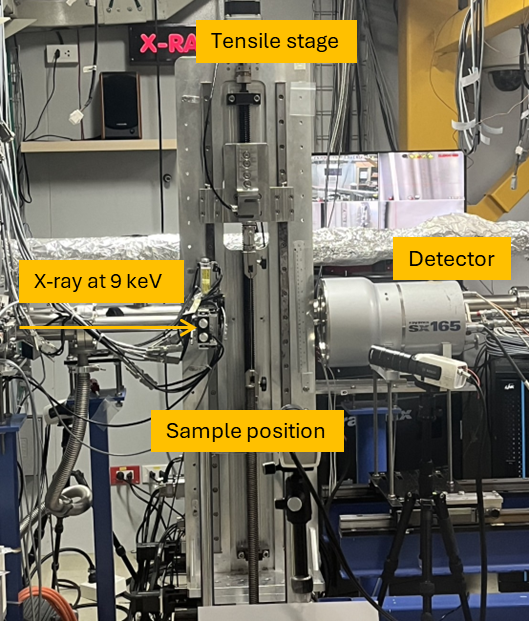
Tensile stage setup at BL1.3W for in situ SAXS/WAXS measurements (SCG stage)
In-situ Tensile Stage (beamline stage)
A sample stretching system at BL1.3W is available with a maximum elongation of 20 cm, a maximum tensile force of 500 N, and heating capability up to 100 °C.
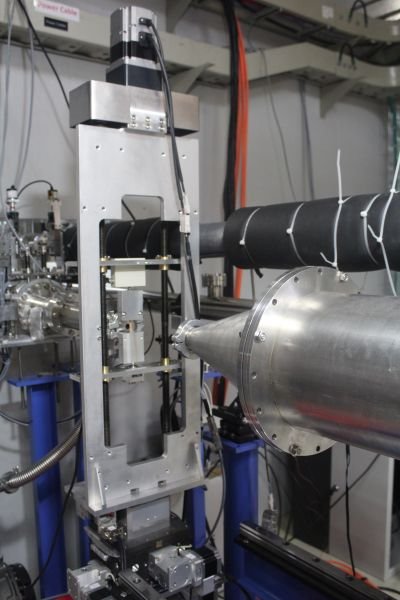
Tensile stage setup at BL1.3W for in situ SAXS/WAXS measurements (Beamline stage)
In-situ Heating Stage
The temperature can be controlled from 5 °C to 200 °C under ambient conditions (Temperature controller; Eurotherm 2116). During measurements, the sample can be loaded into a Cu heating cell, which enables controlled heating of the sample. The heating rate can be freely programmed according to the requirements of the experiment, allowing temperature-dependent structural changes to be investigated in situ.
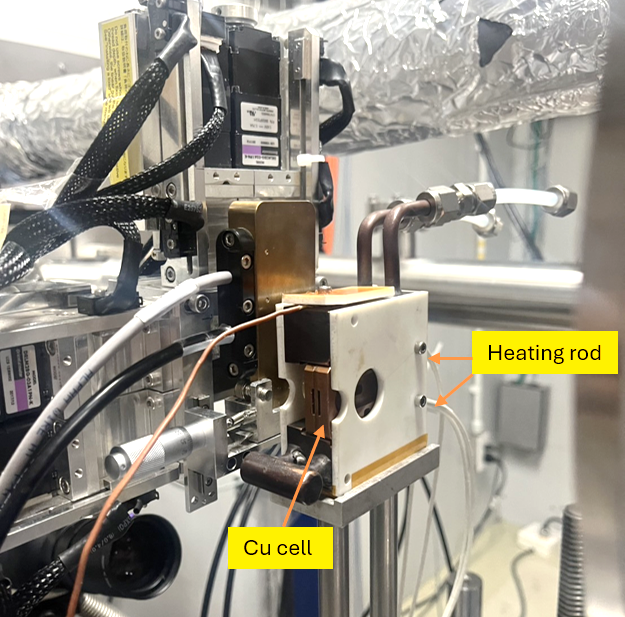
Cu heating cell used for in situ SAXS/WAXS measurements at BL1.3W. The Cu cell is equipped with heating rods for controlled sample heating, with the sample positioned inside the cell during measurements.
In-situ Cooling and Heating Stage (SAXS Temperature Sweep)
SAXS measurements can be performed while varying the sample temperature to investigate temperature-dependent structural changes and phase behavior. The temperature control system enables precise and programmable temperature ramping, with cooling and heating capability from −100 to 270 °C.
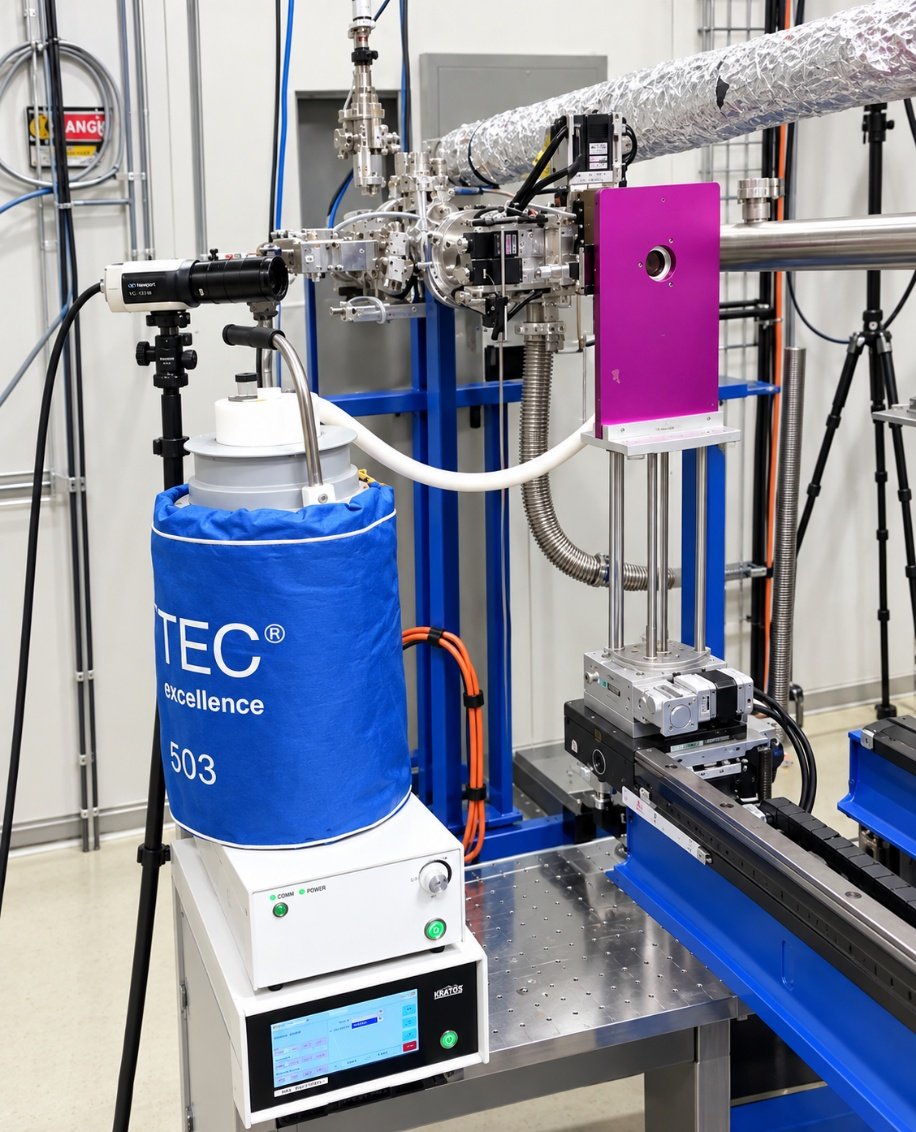
Temperature control system for in-situ SAXS/WAXS measurements (Temp Sweep Instec with mK2000 Temperature Controller)
Automatic Sample Changer
BL1.3W is equipped with automatic sample changers for both solid and liquid samples, enabling efficient sequential measurements of multiple samples with minimal manual handling.
Solid Sample Changer
- Holds up to 34 solid samples per measurement cycle.
- Uses aluminum sample frames with Kapton windows.
- Sample holder size: 10 × 10 mm, with a 1.5 mm thickness.
Liquid Sample Changer
- Holds up to 17 liquid samples per measurement cycle.
- Uses Cu cells with Kapton windows.
- Sample chamber size: 4 × 10 mm, with a 1.5 mm thickness.
- Sample volume: up to approximately 60 µL per cell.
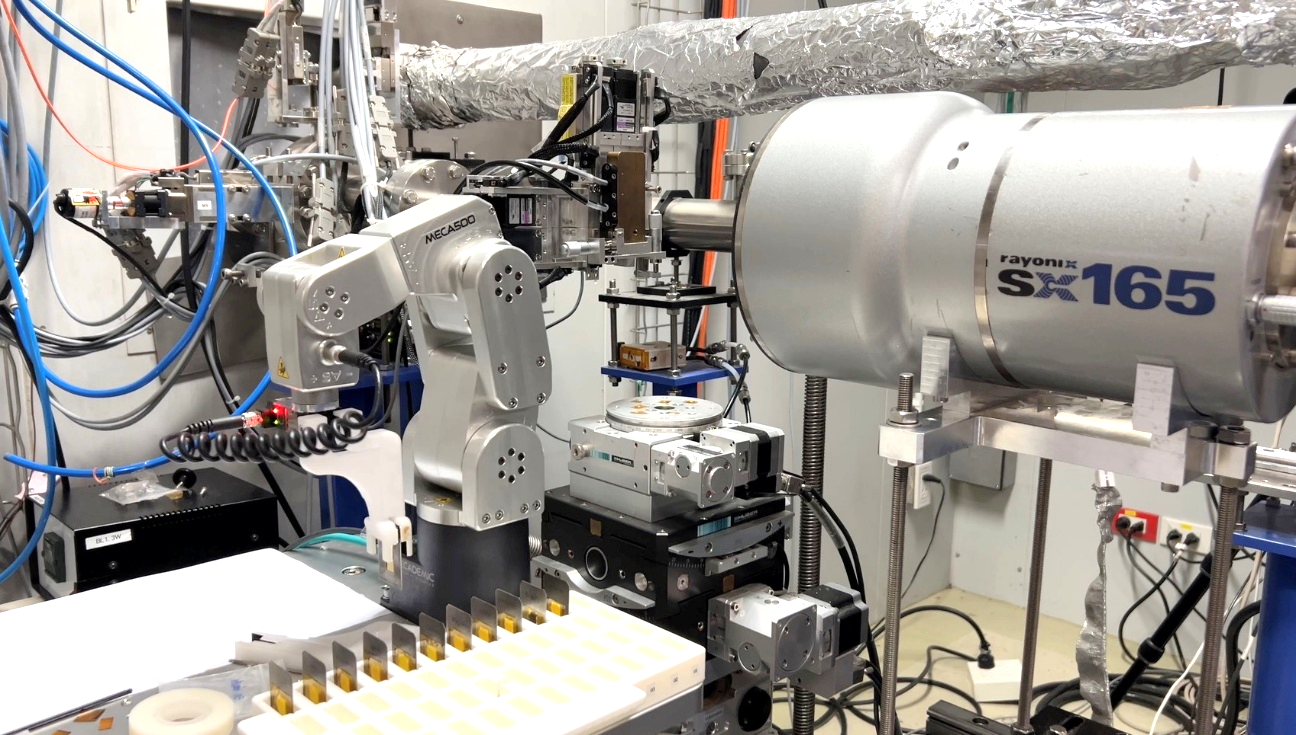
Automatic Sample Changer at BL1.3W
Equipment Overview
| Equipment | Temperature range | Atmosphere option | Key Features |
|---|---|---|---|
| In-situ Tensile stage (SCG) | Up to 200 °C | Ambient Atmosphere |
|
| In-situ Tensile stage (beamline) | Up to 100 °C | Ambient Atmosphere |
|
| In-situ Heating stage | 5 to 200 °C Minimum ramp rate: ±0.1 ℃/min Maximum ramp rate: 20 ℃/min heating rate at 100 ℃ | Ambient Atmosphere |
|
| SAXS Temperature Sweep | −100 °C to 270 °C Minimum ramp rate: ±0.01 ℃/min Maximum ramp rate: 200 ℃/min heating rate at 100 ℃ | Ambient Atmosphere |
|
| Automatic Sample Changer | – | Ambient Atmosphere |
|
Standards, Sample Holders & Support
Standard for SDD calibration
- 4-Bromo for WAXS
- AgBH for SAXS at SDD less than 2200 mm
- SEBS for SAXS at SDD more than 2200 mm
Equipment Support at BL1.3W
- Sonicator for ultrasonic dispersion and homogenization of samples
- Vortex Mixer for rapid mixing and agitation of solutions
- Syringes and Pipettes for accurate sample dispensing and solution transfer
- Common Solvents: Ethanol, DI water, and HPLC-grade solvents, et al.
Support lab
Siam Photon Laboratory (SPL) provides advanced instruments and facilities to support users:
- Dry Lab tools: pestle and mortar, tweezers, spatulas, etc.
- Precision Balance (2-Decimal Place)
- Analytical Balance (4-Decimal Place)
- Fume Hood
- Hot Air Oven
- Mini Mill
- Hydraulic Press 15-Ton
Sample holder at BL1.3W
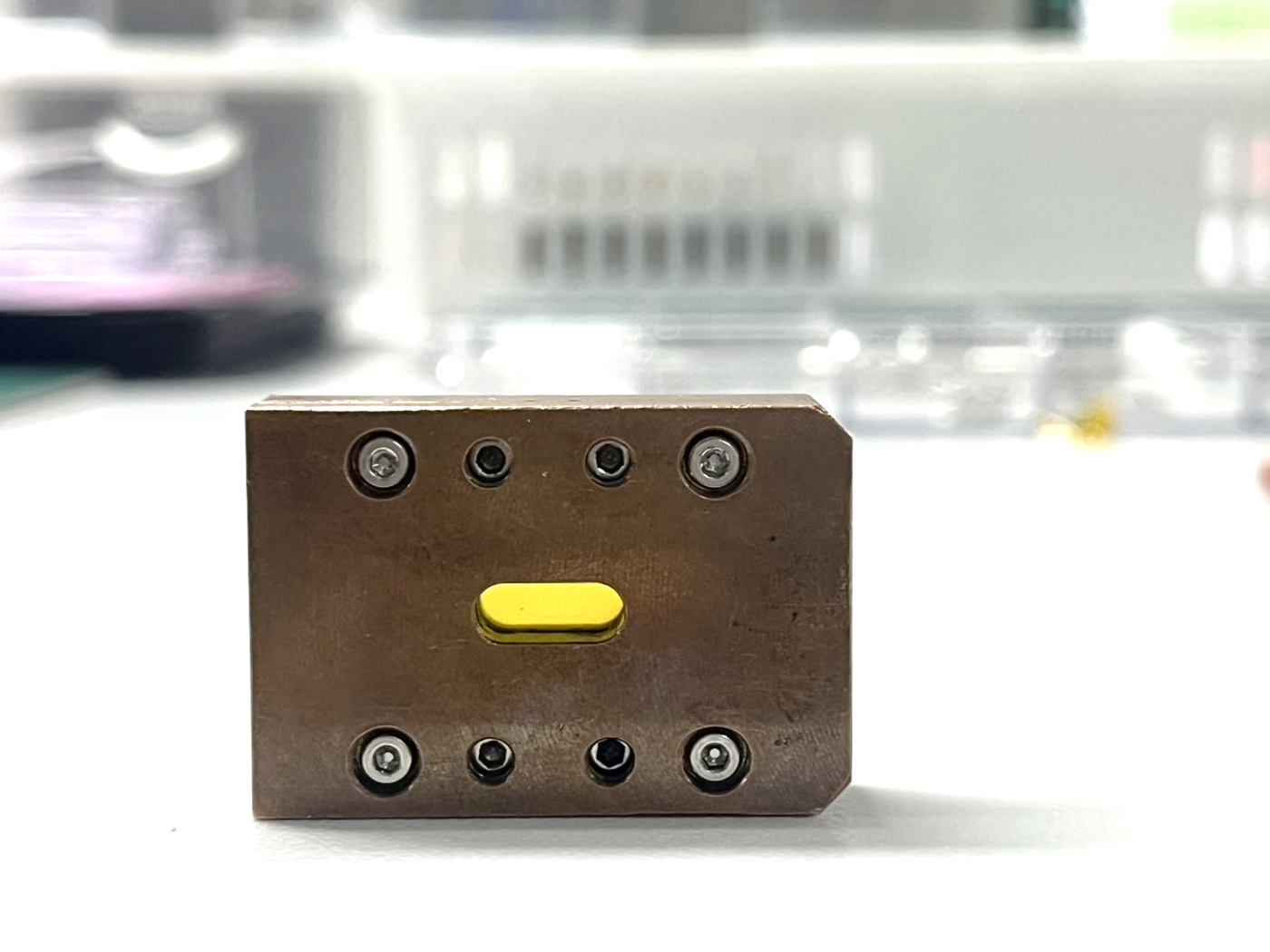
Cu cell for Liquid sample (vol=60 mL) and in-situ heating
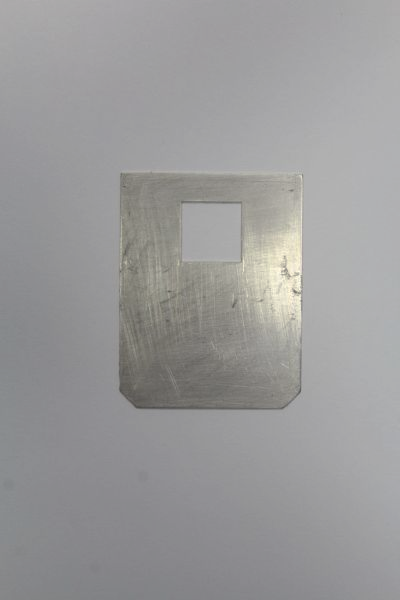
Al frame for solid/powder sample
Beamline Manual
คลิกหัวข้อเพื่อเปิดอ่าน
Sample Preparation
1. Specifications of Standard Substances
- For the SAXS technique, there is a standard substance for calibrating the distance from the sample to the detector, namely Silver Behenate (AgC22H43O2) which gives a scattering pattern similar to the Powder Diffraction Pattern of the 001 plane, with a d-spacing 5.8376 nm which can be used to calibrate distances up to approximately 3 meters (a minimum q value of approximately 0.08 nm-1 or a minimum 2theta value of approximately 0.096 degrees). In addition, other standard substances can also be used for calibration, such as rat-tail tendon, which has an ordered collagen molecular structure, with a Period Size 67 nanometers.
- For the WAXS technique at BL1.3W, standard substances are available, such as 4-Bromobenzoic acid and Titanium dioxide.
- Chemical Inventory
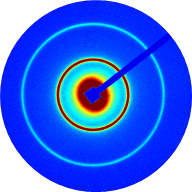
Silver Behenate
Silver Behenate is a compound with the chemical formula AgC₂₂H₄₆O₂ which is commonly used as a standard for measuring the size and shape of nanostructures using the Small-Angle X-ray Scattering technique (SAXS) due to the following favorable properties:
- Ordered crystal structure: Silver behenate has a lamellar crystal structure with a high degree of order. This characteristic produces a clear X-ray scattering pattern that can be easily analyzed.
- Known interplanar spacing: The interplanar spacing (d-spacing) of Silver behenate is well known (5.44 nm). This information can be used as a standard for calibrating the SAXS instrument and verifying data accuracy.
- High purity: Silver behenate used commercially is usually of high purity with few impurities, resulting in a clear X-ray scattering pattern free of noise.
- Easily soluble: Silver behenate dissolves easily in many organic solvents, such as toluene, chloroform, and acetone. This property makes it easy to prepare samples for SAXS measurement.
Example applications of Silver behenate in SAXS
- Instrument calibration SAXS: comparing the X-ray scattering pattern of Silver behenate with the standard value to verify instrument accuracy
- Analysis of nanostructure size and shape: The X-ray scattering pattern of Silver behenate can be used to calculate the size and shape of nanostructures, such as nanoparticles, micelles, and liposomes
- Study of molecular self-assembly: Changes in the X-ray scattering pattern of Silver behenate can be used to track molecular self-assembly in solution
- Study of structural changes: Changes in the X-ray scattering pattern of Silver behenate can be used to track structural changes in the material, such as phase transitions
Safety information: Avoid direct contact with skin and eyes · May cause irritation to the respiratory system · Should be stored in a tightly closed, dry container
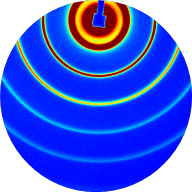
Styrene-Ethylene-Butylene-Styrene (SEBS)
SEBS is a copolymer commonly used as a standard for measuring the size and shape of nanostructures using the Small-Angle X-ray Scattering technique (SAXS) due to the following favorable properties:
- Ordered microphase structure: SEBS has an ordered microphase structure, consisting of polystyrene (PS) domains dispersed in a poly(ethylene-butylene) (EB) matrix. This characteristic produces a clear X-ray scattering pattern that can be easily analyzed.
- Known inter-domain spacing: The inter-domain spacing of PS of SEBS is well known. This information can be used as a standard for calibrating the SAXS instrument and verifying data accuracy.
- High purity: SEBS used commercially is usually of high purity with few impurities, resulting in a clear X-ray scattering pattern free of noise.
- Easily soluble: SEBS dissolves easily in many organic solvents, such as toluene, chloroform, and acetone. This property makes it easy to prepare samples for SAXS measurement.
Example applications of SEBS in SAXS
- Instrument calibration SAXS: comparing the X-ray scattering pattern of SEBS with the standard value to verify instrument accuracy
- Analysis of domain size and shape PS: The X-ray scattering pattern of SEBS can be used to calculate the size and shape of the PS domain
- Study of microphase structural changes: Changes in the X-ray scattering pattern of SEBS can be used to track microphase structural changes, such as changes in domain size
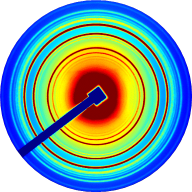
4-Bromobenzoic acid
4-Bromobenzoic acid is an organic compound with the chemical formula C7H5BrO2 which is commonly used as a standard for measuring the size and shape of crystal structures using the Wide-Angle X-ray Scattering technique (WAXS) due to the following favorable properties:
- Ordered crystal structure: It has a highly ordered molecular crystal structure. This characteristic produces a clear X-ray scattering pattern that can be easily analyzed.
- Interplanar spacing: The interplanar spacing (d-spacing) of 4-Bromobenzoic acid is well known (0.472, 0.374, 0.331 nm). This information can be used as a standard for calibrating the WAXS instrument and verifying data accuracy.
- High commercial purity: High purity with few impurities results in a clear X-ray scattering pattern free of noise.
- Easily soluble: Dissolves easily in many organic solvents, such as toluene, chloroform, and acetone. This property makes it easy to prepare samples for WAXS measurement.
Example applications of 4-Bromo in WAXS
- Instrument calibration WAXS: comparing the X-ray scattering pattern of 4-Bromobenzoic acid with the standard value to verify instrument accuracy
- Analysis of crystal size and shape: The X-ray scattering pattern of 4-Bromobenzoic acid can be used to calculate crystal size and shape
- Study of crystal structural changes: Changes in the X-ray scattering pattern of 4-Bromobenzoic acid can be used to track crystal structural changes, such as phase transitions
Precautions: Irritant to skin, eyes, and the respiratory system · Wear protective equipment such as gloves, goggles, and a mask when handling this substance · Keep this substance out of reach of children and pets
2. Solid Sample Preparation
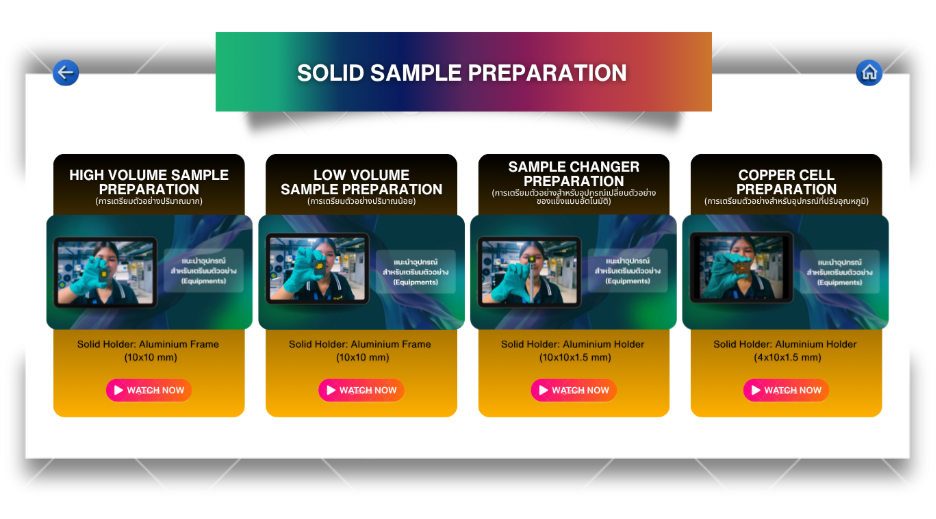
2.1 High Volume Sample Preparation
Solid Holder: Aluminium Frame (10×10 mm)
▶ ดูวิดีโอ (Solid Frame_High)2.2 Low Volume Sample Preparation
Solid Holder: Aluminium Frame (10×10 mm)
▶ ดูวิดีโอ (Solid Frame_Low)2.3 Sample Changer Preparation
Sample preparation for the automatic solid sample changer
Solid Holder: Aluminium Holder (10x10x1.5 mm)
2.4 Copper Cell Preparation
Sample preparation for the temperature-control device
Solid Holder: Aluminium Holder (4x10x1.5 mm)
3. Liquid Sample Preparation
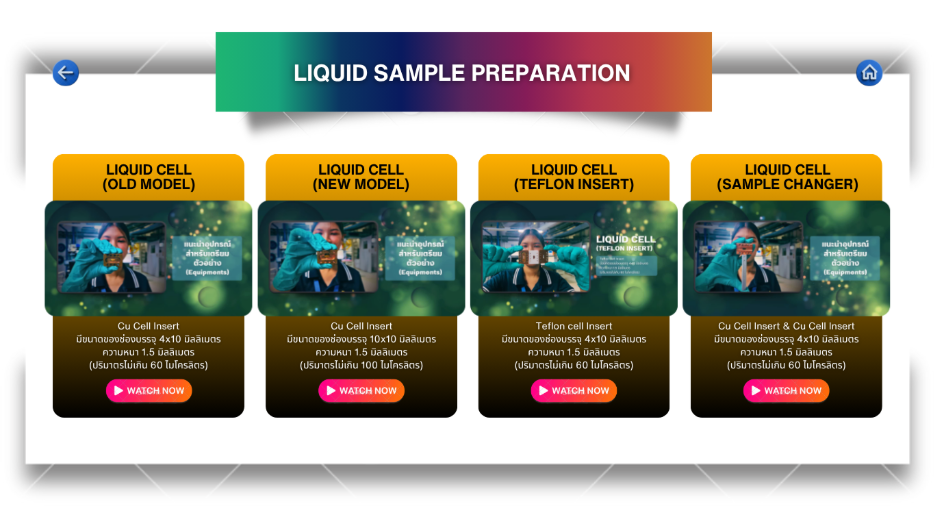
3.1 Liquid cell (old model)
Cu Cell Insert: sample well size 4×10 mm, thickness 1.5 mm (maximum volume 60 microliters)
▶ ดูวิดีโอ (Liquid cell (old model))3.2 Liquid cell (New model)
Cu Cell Insert: sample well size 10×10 mm, thickness 1.5 mm (maximum volume 100 microliters)
▶ ดูวิดีโอ (Liquid cell (new model))3.3 Liquid cell (Teflon insert)
Teflon cell Insert: sample well size 4×10 mm, thickness 1.5 mm (maximum volume 60 microliters)
▶ ดูวิดีโอ (Liquid cell (Teflon Insert))3.4 Liquid cell (Sample changer)
Cu Cell Insert: sample well size 4×10 mm, thickness 1.5 mm (maximum volume 60 microliters)
▶ ดูวิดีโอ (Liquid cell (sample changer))Data Analysis Tools
To facilitate your research, Beamline 1.3W recommends the following standard software packages for processing, reducing, and analyzing SAXS/WAXS data. These tools are widely accepted in the synchrotron community and are free for academic use. Users can download and install these programs on their personal computers for offline data analysis.
1. SAXSITS (In-house Software)
SAXSITS is a specialized, in-house developed software by the SLRI team specifically optimized for SAXS data analysis at Beamline 1.3W. It offers user-friendly features tailored for the beamline’s specific configurations and standard user requirements.
Download & Documentation →2. SasView (Recommended for SAXS Modeling)
SasView is an open-source application specifically designed for the analysis of Small-Angle Scattering (SAS) data. It is highly recommended for evaluating nanostructures, fitting 1D and 2D scattering data, and calculating form factors and structure factors for various shapes (e.g., core-shell, cylinders, liposomes, and polymer structures).
Download & Documentation →3. ATSAS Suite (BioSAXS)
ATSAS is a world-leading program suite developed primarily for small-angle scattering data analysis from biological macromolecules (BioSAXS) and nanoparticles. It includes popular programs like PRIMUS for primary data evaluation, GNOM for distance distribution functions, and DAMMIF/DAMMIN for 3D ab initio shape reconstruction.
Download & Documentation →4. BioXTAS RAW
BioXTAS RAW is a free, open-source python program for the reduction and analysis of SAXS and WAXS data. It provides an intuitive graphical interface for 2D-to-1D azimuthal integration, molecular weight estimation, and seamless integration with ATSAS tools.
Download & Documentation →5. GSAS-II (WAXS & Crystallinity)
For Wide-Angle X-ray Scattering (WAXS) and powder diffraction data, GSAS-II is a comprehensive crystallographic data analysis package. It is widely used by researchers to perform Rietveld refinement, phase identification, and crystallinity index calculations for solid and polymer samples.
Download & Documentation →6. Fit2D / pyFAI
These are essential tools for the primary reduction of 2D detector images to 1D scattering profiles. While pyFAI is typically integrated into the beamline’s automated background pipeline, Fit2D remains a classic standalone program for manual masking and calibration of 2D scattering patterns.
Download & Documentation →7. Irena (SAS Data Analysis)
Irena is a comprehensive package of Igor Pro macros for small-angle scattering (SAS) data analysis. It provides advanced tools for modeling size distributions, specific surface areas, and unified fit modeling, making it highly effective for complex hierarchical structures and pore analysis.
Download & Documentation →8. Fityk (WAXS Curve Fitting)
Fityk is a free, open-source curve fitting and data analysis application. It is exceptionally useful for WAXS data analysis, particularly for peak deconvolution, separating overlapping diffraction peaks, and calculating the degree of crystallinity in polymer and solid samples.
Download & Documentation →Instruction Manuals
Small/Wide Angle X-ray Scattering (SAXS/WAXS) Station Manual (Thai Version)