Research Highlight/News
Research Highlight/News
Research Highlights
Lithium Borate Glass Ceramics and Multi-Walled Carbon Nanotube Composite as Efficient Sulfur Hosts for Enhanced Lithium-Sulfur Batteries
The transformation of sulfur molecules over a glass-carbon nanotube cathode was validated using X-ray absorption spectroscopy. The XANES results highlighted the performance of lithium borate glass for lithium-sulfur batteries. LBO promoted sulfur diffusion and inhibited electrochemical reduction of lithium polysulfide on the lithium anode surface.
DOI: 10.1021/acsaelm.5c00223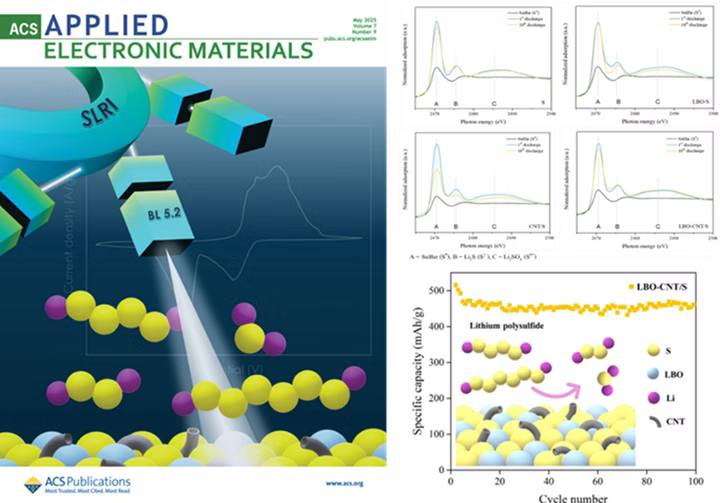
Effect of recycled glass-V2O5 composite for stabilizing cathode capacity of lithium-ion batteries
This study examined recycled glass-V2O5 composites as cathode materials for lithium-ion batteries. XANES analysis confirmed reversible V4+/V5+ redox transformation and indicated that moderate glass content improved structural stability and capacity retention during cycling.
DOI: 10.1016/j.mtla.2024.102132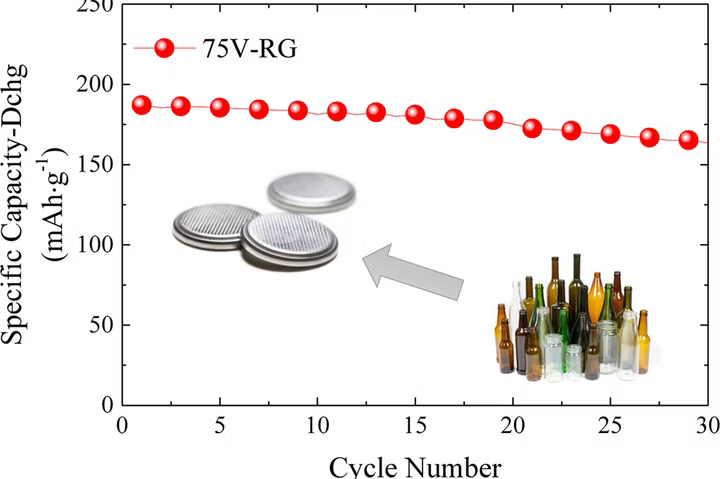
Li-S-B Glass-Ceramics: A Novel Electrode Material for Energy Storage Technology
Li-S-B glass-ceramic electrodes doped with Ni and Mn were studied using synchrotron XAS. The work identified mixed Ni2+/Ni3+ oxidation states, a stable discharge capacity of 70 mAh/g and performance over 100 electrochemical cycles.
DOI: 10.1016/j.mset.2024.11.002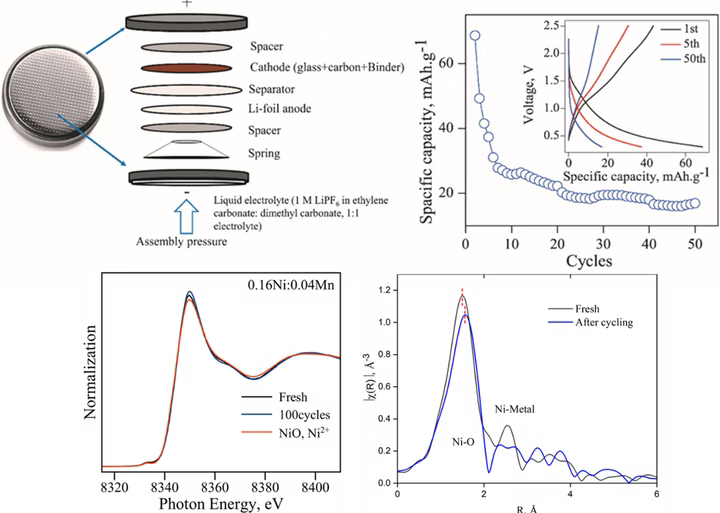
Enhanced Capacity and Cyclic Performance of Lithium-Ion Battery Using V2O5 and Lithium Borate Glasses Doped with Manganese, Cobalt and Nickel
The NMC-doped lithium borate glass and V2O5 cathode reached a specific capacity of 280 mAh/g. XANES tracked the transition from a dominant V4+ state in fresh samples toward V5+ after cycling, supporting improved redox activity and electrochemical stability.
DOI: 10.1016/j.radphyschem.2025.112839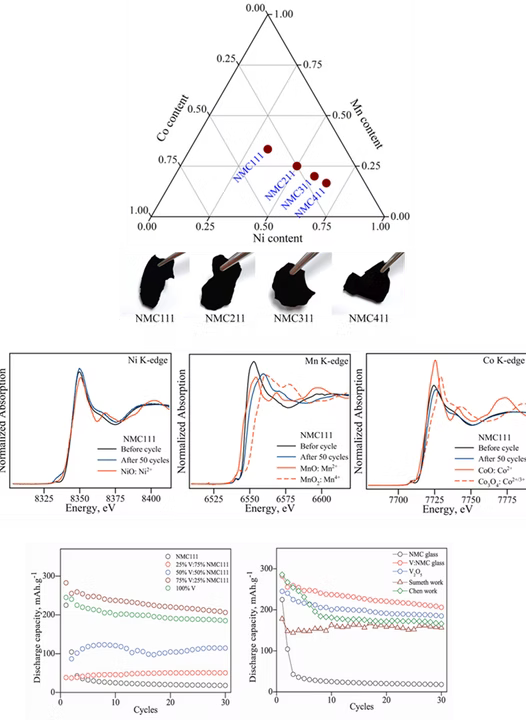
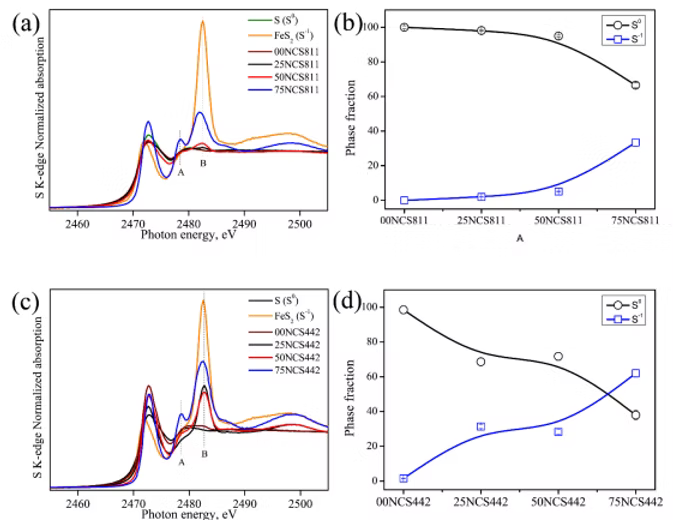
Glass-Sulfur Composite Cathodes: A New Strategy for Improving Lithium-Sulfur Batteries
Glass-sulfur composite cathodes were prepared by precipitation. XAS indicated that a 75% glass ratio changed sulfur chemistry, including an increased proportion of sulfur in the S−1 oxidation state, and supported reduced resistivity and improved capacity and efficiency.
DOI: 10.1016/j.materresbull.2024.112919