






Battery Research Highlights – BL2.2 TRXAS
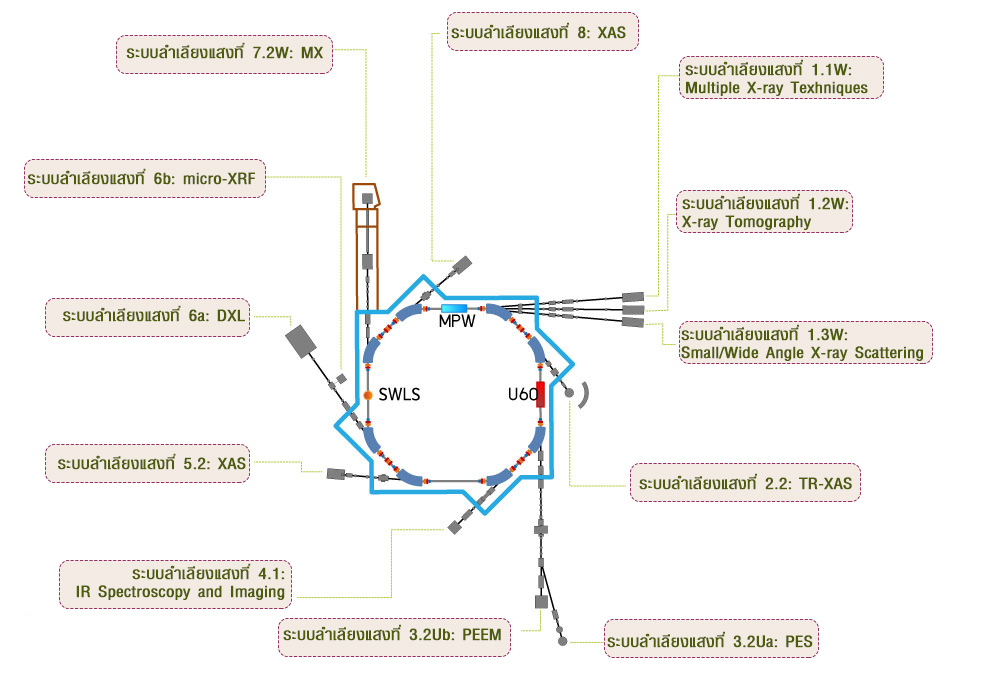
At the BL2.2 (TRXAS) beamline, in situ and operando X-ray absorption spectroscopy is used to study lithium-extraction and insertion mechanisms in electrode materials, and to monitor dynamic phase transformations and metastable phase formation during charge–discharge cycles. The selected works below highlight recent battery research enabled by the beamline.
XANES Investigation of Dynamic Phase Transition in Olivine Cathode for Li-Ion Batteries
This work uses in situ X-ray absorption spectroscopy (XAS) to investigate the dynamic phase transition in a LiFePO4 (LFP) cathode for Li-ion batteries. An intermediate amorphous phase forms as a result of the dynamic phase transition of LFP, in addition to the known crystalline FP phase. The technique can be used to probe the formation of non-crystalline metastable phases that are difficult to track using other methods.
Authors: Sarawut Pongha, Boonyarit Seekoaon, Wanwisa Limphirat, Pinit Kidkhunthod, Sutham Srilomsak, Yet-Ming Chiang, and Nonglak Meethong
Read the publication: https://doi.org/10.1002/aenm.201500663
Prelithiation Mechanism of Silicon Anodes through the Interfacial Destabilization of Lithium Hydride
This study offers mechanistic insights into phase transformation and microstructural evolution through the prelithiation mechanisms of LiH and Si materials, using TEM, in situ XRD, and computational simulations. It reveals key aspects of prelithiation in Si, including interfacial interactions, thermodynamics, and kinetic lithiation processes.
Authors: Natthapong Kamma, Kiettipong Banlusan, Komsak Aranmala, Orapa Tamwattana, Wanwisa Limphirat, Chatree Saiyasombat, Jeffrey Nash, Pimpa Limthongkul, Nonglak Meethong
Read the publication: https://doi.org/10.1021/acsaem.4c01957
Enhancing the Rate Capability and Cycling Stability of Na4MnV(PO4)3/C Composite Cathodes via in Situ Carbon Dots Formation for Sodium-Ion Batteries
To address the low conductivity of NASICON-structured Na4MnV(PO4)3 (NMVP), this study introduces NMVP/C-CDs synthesized via a scalable spray-drying method using carbon dots (CDs) derived from coconut shells. This approach significantly enhances electronic conductivity and structural stability, achieving excellent rate performance and 81.1% capacity retention over 1000 cycles. The results position NMVP/C-CDs as a highly efficient and commercially viable cathode material for sodium-ion batteries.
Authors: Komsak Aranmala, Phongsit Krabao, Natthapong Kamma, Songyoot Kaewmala, Natthawan Prasongthum, Wanwisa Limphirat, Yujeong Jeong, Myong Yong Choi, Jeffrey Nash, and Nonglak Meethong
Read the publication: https://doi.org/10.1021/acsaem.5c00766